










This article is about the origins of the plants and spices behind traditional holiday beverages like mulled wine, wassail, eggnog, and hot cocoa.
“Every sip of a holiday drink holds centuries of trade, tradition, and travel. It’s a warm blend of plants, people, and stories passed through time.” — The Economic Botanist
Every winter, the same familiar aromas return: cinnamon rising from mulled wine, nutmeg dusted over eggnog, cloves warming spiced cider, and rich cocoa swirling in a steaming mug. These drinks feel timeless and comforting, but their stories stretch far beyond modern holiday traditions. Behind every sip lies a complex history of plants, people, and power — shaped by ancient rituals, global trade routes, and centuries of cultural exchange.
In this article, we’ll trace the botanical origins of iconic holiday beverages like mulled wine, wassail, eggnog, and hot cocoa; explore how global trade and colonial history shaped their ingredients; and examine how these plant-based traditions continue to evolve in modern seasonal celebrations. What we now call “cozy” is, in truth, the result of centuries of exploration, adaptation, and tradition, still warming our hands and stories today.
The Roots of Holiday Drinking Traditions
It’s no coincidence that some of the world’s coziest drinks show up in winter. Spiced wine, warm cider, creamy eggnog, and rich hot chocolate aren’t just tasty — they’re deeply rooted in the need to preserve warmth, celebrate harvests, and mark the turning of the seasons.
Long before electric heat and supermarkets, people relied on preserved ingredients during the cold months. Alcohol, fermented berries, dried spices, and preserved fruits became the core of winter survival — and celebration.
Why Spices in Winter?
Spices like cinnamon, cloves, and nutmeg weren’t originally local to Europe or North America — they were rare, imported luxuries. Adding them to a drink made it feel festive, comforting, and, quite frankly, expensive. These warming spices also had real (or believed) medicinal benefits. They were thought to help with digestion, prevent illness, and warm the body from the inside out.
So yes, your spiced wine and hot cocoa are delicious, but they’re also the end result of centuries of global spice routes, colonial history, and cultural traditions. Let’s dive in.
Spiced Wine & Wassail: Europe’s Winter Warmers
Mulled Wine: From Ancient Rome to Modern Markets
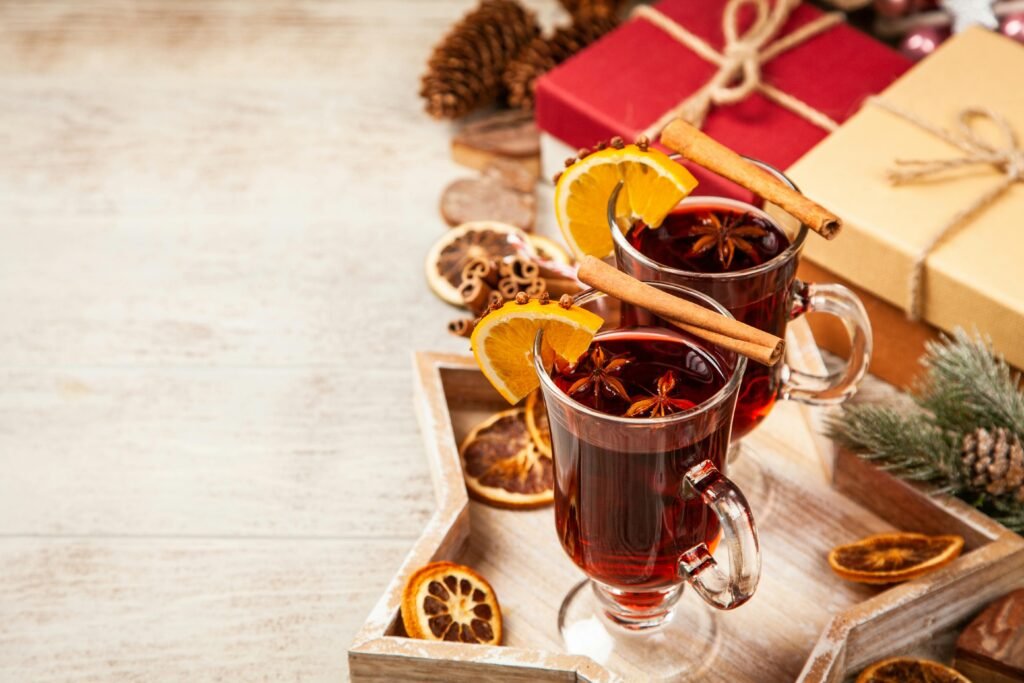
Today’s mulled wine — a warm red wine infused with cinnamon, cloves, citrus, and sometimes star anise — traces back to ancient Rome. The Romans had a version called conditum paradoxum, which included wine heated with honey and spices.
As the Roman Empire spread, so did their love for spiced wine. Over time, medieval Europeans began using locally available and imported spices to flavor hot wine during winter feasts.
In Germany, it became Glühwein, while in Nordic countries, Glögg is the popular version. In Britain and France, mulled wine became a Christmas classic.
Common Mulled Wine Spices:
These spices are more than tasty — they have real roots in trade history and botanical significance, which we’ll get to in the next section.
Fun Fact
Before sugar was widely available, honey was the primary sweetener in mulled wine.
Wassail: A Toast to Orchard Spirits
Wassail is one of those words that sounds old — because it is. It comes from the Old English waes hael, meaning “be healthy” or “be whole.”
Originally, wassail was a spiced ale or cider used during ceremonies to bless apple orchards for a good harvest in the coming year. People would go wassailing, singing to the trees, pouring cider on their roots, and hanging bread-soaked pieces on branches as offerings to spirits.
The drink itself was typically made from:
Hot ale or cider
Apples
Spices like nutmeg and cloves
Toasted bread or cake floating on top (yes, like real toast)
Wassail later evolved into a general term for festive toasting. Over time, the drink was sweetened, fortified, and made more elaborate.
The Spice Route: Cinnamon, Cloves & Nutmeg
Let’s talk about the stars of the show. These spices aren’t just delicious — they were once so valuable that entire wars were fought over them.
Cinnamon: The Bark of Legends
Cinnamon comes from the inner bark of trees in the Cinnamomum family. True cinnamon (also known as Ceylon cinnamon) is native to Sri Lanka, while cassia cinnamon — the more common variety — comes from China and Southeast Asia.
Cinnamon was known to the ancient Egyptians and mentioned in the Bible. For centuries, its true origin was a closely guarded secret. European demand was so high that Portuguese and Dutch traders fought to control its production.
Today, cinnamon is a cozy staple in mulled drinks, cookies, and even savory dishes — especially during the holidays.
Cloves: Tiny Buds with Big History
Cloves are the dried flower buds of Syzygium aromaticum, a tree native to the Maluku Islands (also known as the Spice Islands of Indonesia). These little buds pack a punch — warm, sweet, and pungent.
Arab traders first brought cloves to Europe around the 4th century CE. Later, the Portuguese and Dutch colonizers took over the trade. At one point, cloves were worth their weight in gold.
Their strong, warming scent made them perfect for winter drinks — and many believed they had powerful health benefits.
Fun Fact
Clove-studded oranges, also known as pomanders, were once used as both air fresheners and primitive holiday decorations — and they share the same festive spices as many holiday drinks.
Nutmeg: The Spice That Changed the World
Nutmeg comes from the seed of the Myristica fragrans tree, which is also native to the Banda Islands in Indonesia. Interestingly, the same fruit also gives us mace, the lacy covering of the nutmeg seed.
Nutmeg was so valuable in the 1600s that it played a central role in colonial expansion. The Dutch traded the island of Manhattan to the British in exchange for full control of nutmeg-growing islands.
Today, it’s a staple in eggnog, wassail, and baked holiday treats.
Eggnog: A Colonial Concoction
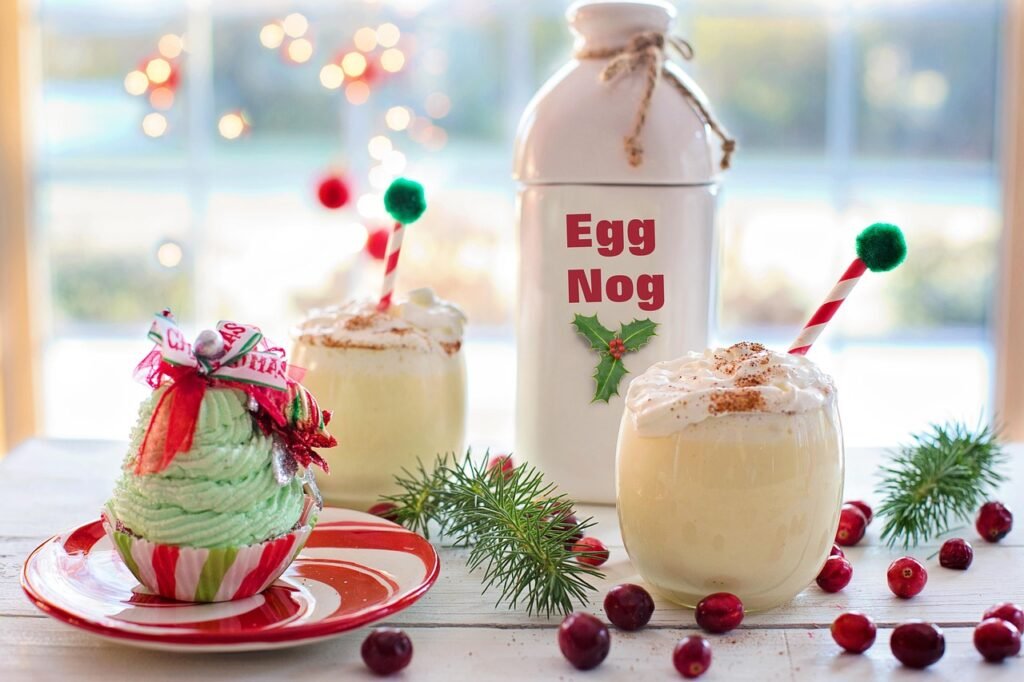
Love it or hate it, eggnog is one of the most iconic holiday drinks — and one of the richest. It combines eggs, cream, sugar, and spices (usually nutmeg and sometimes cinnamon or clove), often spiked with rum, brandy, or bourbon.
Fun Fact
The word “nog” in eggnog likely comes from “noggin,” a small wooden mug used for serving alcohol in 17th-century England.
Where Did Eggnog Come From?
Eggnog’s roots go back to medieval Britain, where a drink called posset — made of hot milk curdled with ale or wine and spiced — was used as both a remedy and a celebration drink.
In the American colonies, rum from the Caribbean was added, and the drink evolved into what we now call eggnog.
Because eggs, milk, and spices were luxury items, eggnog became a special-occasion drink — one that marked wealth and celebration, especially around Christmas and New Year.
Why Nutmeg?
Nutmeg was a prized spice, and shaving a bit on top of your eggnog was both a flavor choice and a flex. It signaled that you had access to exotic spices — something not everyone could say back then.
Hot Cocoa: From Sacred Aztec Ritual to Comfort Mug
Today, hot chocolate is pure comfort. But originally, cacao wasn’t sweet at all — and it wasn’t even hot.
Cacao’s Origins
The cacao tree (Theobroma cacao) is native to Central and South America. The Olmecs, Maya, and Aztecs all used cacao in spiritual and ceremonial ways. The Aztecs made a cold, bitter drink called xocolatl, often mixed with chili, cornmeal, and spices like vanilla.
Cacao was considered a gift from the gods (the name Theobroma literally means “food of the gods”). Cacao beans were even used as currency.
When Spanish colonizers brought cacao back to Europe, it was eventually sweetened with sugar and flavored with cinnamon or nutmeg — turning it into the hot chocolate we know and love today.
Why It’s a Holiday Classic
As chocolate became more accessible and sugar more affordable, hot cocoa became a go-to winter treat. The rich, creamy texture and warming spices made it perfect for cozying up indoors during the colder months.
Fun Fact
In 17th-century London, chocolate houses were as popular as coffee houses — and often served political and philosophical discussions with your drink.
The Cultural Legacy of Spiced Holiday Drinks
So why do these drinks — and their spicy ingredients — show up every holiday season?
Because they symbolize warmth, togetherness, celebration, and survival.
The spices used in holiday beverages — cinnamon, nutmeg, cloves, and cacao — tell stories of:
Global exploration and trade
Colonial conquest and control
Celebration of seasonal cycles
Cultural blending and adaptation
When you sip a holiday drink, you’re not just enjoying a flavor. You’re participating in a centuries-old ritual that connects people across time and geography.
Modern Takes on Ancient Drinks
Today, people are rediscovering and reimagining these traditional beverages with a modern twist. Whether it’s through herbal infusions, dairy-free eggnog, or locally sourced spiced cider, the ethnobotany of holiday drinks is still very much alive.
Some modern spins include:
Plant-based eggnog using almond or oat milk
Hot cocoa bombs with unexpected spice blends (like cayenne or cardamom)
Craft wassail using local apples and wild-foraged herbs
Botanical cocktails featuring elderberry, rosemary, or ginger
People are also becoming more mindful of where their spices come from, opting for ethically sourced cinnamon, fair-trade cacao, and organic nutmeg.
The Bottom Line
Holiday drinks aren’t just tasty — they’re steeped in history, culture, and the science of plants. Whether you’re sipping on mulled wine, eggnog, wassail, or hot cocoa, you’re also tasting the story of global exploration, ancient tradition, and plant-powered celebration.
So next time you reach for that cozy mug, take a second to appreciate the journey those spices made to get there. Cheers to centuries of flavor, warmth, and the shared human love for a good drink.
********************
Curious to try making your own holiday drinks using traditional spices? Subscribe to our newsletter for recipes, plant stories, and tips on ethical sourcing — and keep the stories in your cup as rich as the flavors.